• This is a new textbook. It’s interesting because it studies the Block Island Wind Farm and speaks in depth about Northeast offshore wind. I took some screenshots of the text book.
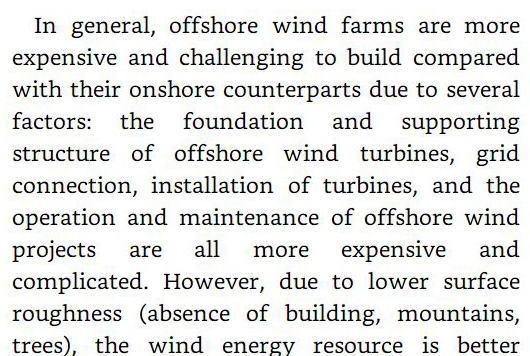
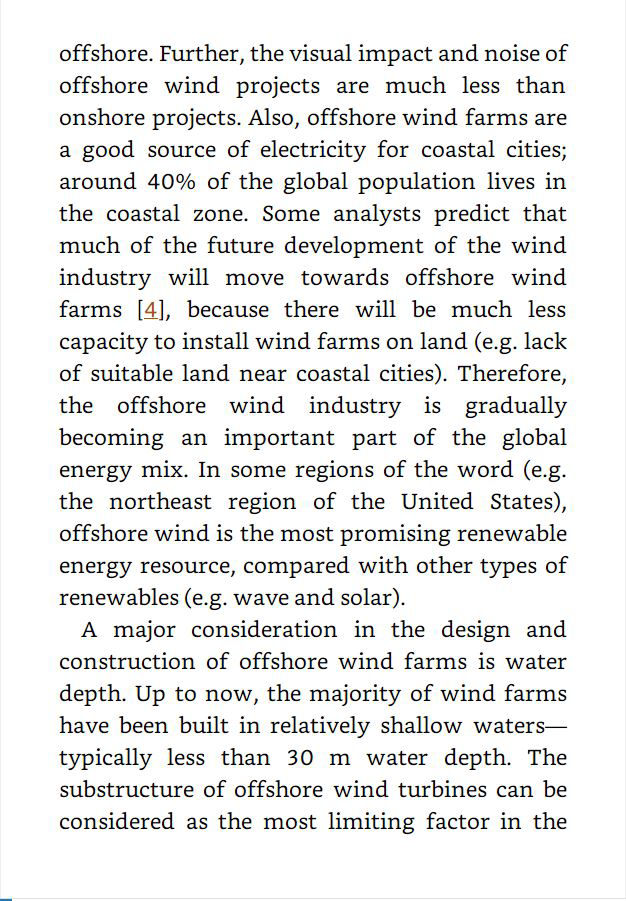
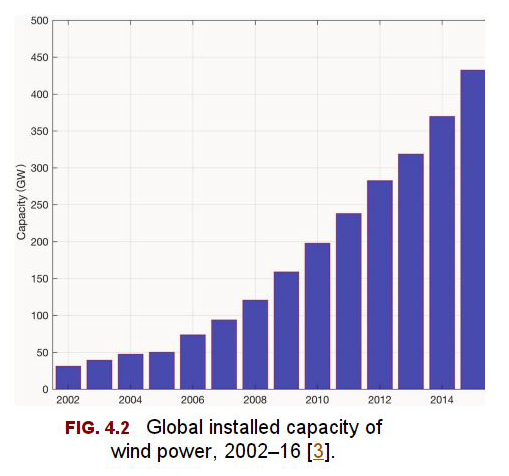
Wind energy is one of the fastest growing renewable energy sectors. Due to lower surface roughness, the wind resource is higher offshore.
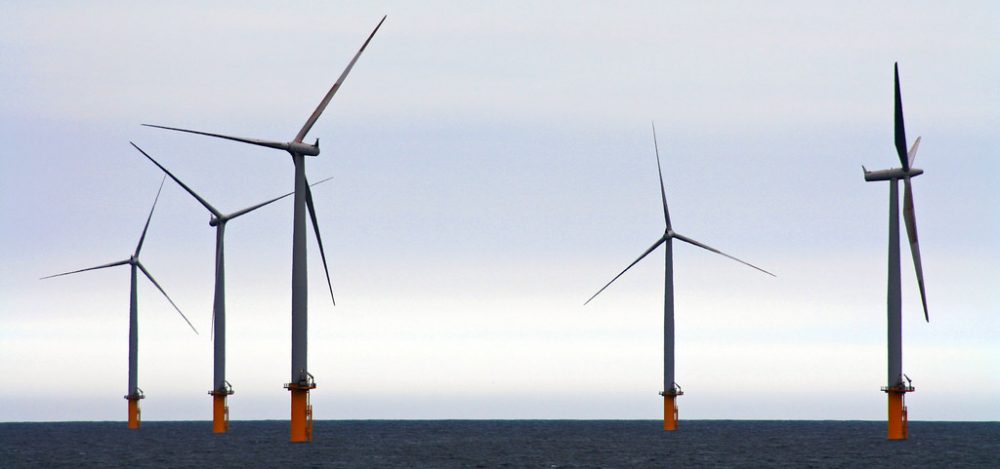
Wind off the coast of Eastern Long Island is among the most consistent in America. The SOUTH FORK WIND FARM’S 15 wind turbines 35 miles off Montauk will not be seen from land and will provide electricity to 70,000 households.
DO WE NEED MORE POWER? Yes. We risk frequent brown outs during the peak summer season. Our energy grid cannot keep up with increasing demand. If power is not provided by wind turbines, use of dirty fossil fuels will continue to rise.
WHAT WILL THIS COST ME? The average household monthly bill will go up by only about $1.50. The good news: because wind is renewable and free, the cost will be stabilized unlike the volatile cost of fossil fuels. This is a small short term cost for a long term solution.
WILL THIS HURT OUR FISHERMEN? After listening to commercial fishermen, Bureau of Ocean Energy Management made sure that wind turbines and cable will avoid Cox’s Ledge, a valuable commercial fishing area. In fact, existing wind turbines off Block Island attract marine life to them, imitating an artificial reef.
THE NATIONAL & GLOBAL CASE FOR WIND ENERGY:
Scientific evidence continues to mount as to the urgency of reducing carbon emissions before it is too late:
SPECIES EXTINCTION Due to Climate Change, one million species will face extinction and humans will suffer as a result unless action is taken. (United Nations report). The Audubon Society supports the use of wind power and reports the greatest threat to birdlife is Global Climate Change.
THE WORLD’S FISHERIES are undergoing tremendous stress as the marine environment is altered by Climate Change. 93% of global warming heat is absorbed into our oceans, dramatically reducing marine life. Acidification of our surface waters is spelling extinction for some fish and shellfish. Eel grass forms the base of a highly productive marine food web. (NOAA). Locally, our commercial fisheries that depend on eel grass for spawning and protection, are threatened.
RISING SEA LEVELS Caused by melting polar ice sheets, threaten coastal communities around the world — including our own.
VIOLENT WEATHER EVENTS Climate Change is producing stronger storms and more intense hurricanes that are wreaking havoc on communities with high public and personal costs, including loss of life. Our towns are on the front line.
PUBLIC HEALTH Warmer winters are dramatically increasing infectious disease-carrying insects as they migrate north due to higher temperatures, causing untold costs and hardship. Locally, the rise in Lyme disease and other tick-borne diseases is alarming.
Our electricity currently comes from a mix of sources: Aging fossil fuel plants on Long Island, imported energy from “dirty” plants in neighboring regions and states, and small local peaker plants in East Hampton and Southampton. These sources all contribute to air pollution and the Climate Crisis, and are subject to volatile “rate shock”. Doesn’t it make sense to begin the move to clean, renewable Offshore Wind Energy?
PLEASE CONNECT WITH US. WE WOULD LOVE TO HEAR FROM YOU.






 WIN WITH WIND